
Water-Smart Yards Built for Dry Climates
Xeriscaping services in South Bay that reduce water use without sacrificing curb appeal.
Your yard drinks water faster than you can afford to supply it, and every summer brings another round of brown patches, wilted beds, and utility bills that climb higher despite your best efforts. Xeriscaping in South Bay replaces high-water layouts with designs built around minimal irrigation, native-friendly planting, and structured materials that hold moisture where it matters most.
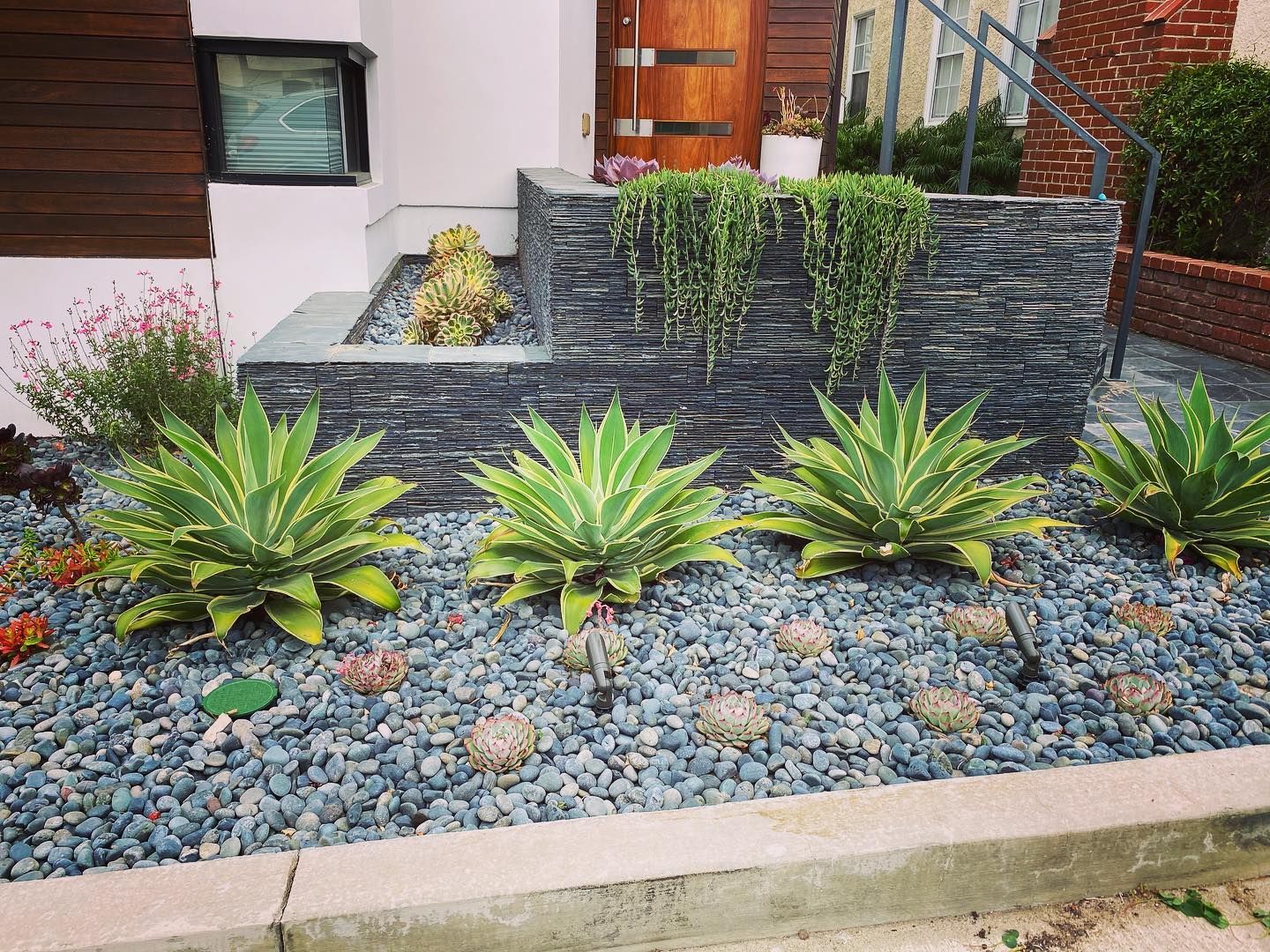
San Agustin Landscape installs xeriscaping systems using gravel, mulch, and layered plantings that reduce evaporation and direct water to root zones instead of letting it run off or evaporate mid-day. This approach works well with Inland Empire climate conditions, helping homeowners comply with water conservation goals while maintaining outdoor spaces that stay green and functional through extended dry seasons. Many projects pair xeriscaping with drip irrigation systems for even greater efficiency.
If you want a yard in South Bay that survives summer heat without constant watering, get in touch to discuss how xeriscaping fits your property.
What Happens During a Xeriscaping Installation
San Agustin Landscape begins by removing turf or high-water plantings, grading the soil to prevent runoff, and installing weed barriers beneath gravel or mulch layers. We arrange plants in clusters based on water needs, placing drought-tolerant varieties in exposed zones and slightly more water-dependent species near drip lines or shaded areas in South Bay properties.
After installation, you will notice less pooling, fewer dry spots, and beds that stay visibly healthy between watering cycles. Your irrigation timer runs less often, and mulch layers prevent weeds from taking over bare soil while keeping roots cooler during peak heat.
We provide guidance on seasonal mulch replacement and adjusting drip emitters as plants mature. The service focuses on layout and installation rather than ongoing maintenance, but it creates conditions that require far less intervention than traditional landscaping. Xeriscaping works well alongside drought-tolerant planting and hardscaping features that further reduce water dependency.
Common Questions About Xeriscaping Projects
Homeowners in South Bay often ask how xeriscaping affects their water bills, what materials we use, and how quickly plants establish. These answers clarify what the process involves and what changes after installation.
Xeriscaping in South Bay gives you outdoor space designed around water efficiency and climate resilience, using materials and plantings that reduce reliance on traditional irrigation. Contact San Agustin Landscape to plan a yard that works with the environment instead of fighting it.